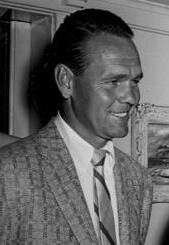
Born in Las Vegas, Nevada, in 1921, Kramer turned to tennis after watching Ellsworth Vines and learned percentage tennis from Cliff Roche at the Los Angeles Tennis Club. In 1939, at 18, he became the youngest player to appear in the Davis Cup. He won US doubles titles in 1940 and 1941 with Ted Schroeder and lost the 1943 US singles final. At his peak he won the US Championships in 1946 and 1947 and Wimbledon in 1947. He turned professional in November 1947, beat Bobby Riggs 69-20 on the 1948 tour and won world pro tours through 1953. As a promoter he signed Sedgman, Hoad and Rosewall, pressed for open tennis and in 1972 became the ATP's first executive director. He entered the International Tennis Hall of Fame in 1968 and died in 2009.
On grass
Major singles titles
3: Wimbledon (1947); US (1946, 1947)
Major singles finals lost
1: US 1943
Other grass singles titles
2: Seabright (1946); US Pro (1948)
Major doubles titles
6 doubles (Wimbledon 2, US 4), 1 mixed (US 1)
Other grass doubles titles
1: US Pro (1948)
Wimbledon singles
1946: second seed, lost to Jaroslav Drobný 2-6, 17-15, 6-3, 3-6, 6-3 in the fourth round. 1947: top seed and champion, beat Tom Brown 6-1, 6-3, 6-2 in the final
Wimbledon doubles
1946 with Tom Brown, 1947 with Bob Falkenburg
US doubles and mixed
Doubles 1940, 1941 and 1947 with Ted Schroeder, 1943 with Frank Parker. Mixed 1941
Finals to remember
US 1947: came back from two sets down to beat Frank Parker 4-6, 2-6, 6-1, 6-0, 6-3. US Pro 1948 at Forest Hills: beat Bobby Riggs 14-12, 6-2, 3-6, 6-3
Davis Cup on grass
Won all four of his singles rubbers in the 1946 and 1947 finals against Australia; the 1946 final was played on the grass of Kooyong, Melbourne
Leading grass titles only: the grass majors, tour-level grass events since 1968 and the leading grass championships before 1968. † single source; ‡ sources disagree. Roll of champions
"If you don't come in on your second serve, your opponent will."
Anecdotes
The person behind the player.
Wimbledon 1946
Tea, a glove and blisters
At the first Wimbledon since 1939 he admired the locker-room valets, sipped tea and remarked: "Say, this stuff isn't bad." A blister on his playing hand forced him into a special glove, and he won three rounds in it. Against Jaroslav Drobný new blisters opened, he took the glove off, and lost in five sets after a 17-15 second set.
A year later he came back as top seed and dropped only one set in the whole tournament. The final against Tom Brown, his doubles partner of the year before, took 48 minutes: 6-1, 6-3, 6-2. With Bob Falkenburg he won the doubles as well, and that November he turned professional.
Bobby Riggs beat him on his professional debut at Madison Square Garden, in a severe snowstorm, on 26 December 1947. Kramer won the tour 69-20. Before a stop in Fort Worth, Riggs pleaded: "Look, you gotta give me a break. Carry me a bit." That night Kramer won 6-0, 6-0.
Off court he called himself "just a businessman". On it Pancho Segura, who toured with him for years, saw something harder: "He was ruthless. He'd beat you love, love and love if he could." Harry Hopman put it more gently: "Kramer did his killing smoothly and quietly."
Wilson began selling the Jack Kramer Autograph racquet in 1948. It stayed in production for decades and became one of the best-selling racquets ever made, so that generations of club players who never saw him play hit the ball with his name in their hands.
As the ATP's first executive director, unpaid at his own request, he backed the players' boycott of Wimbledon over the ban on Nikola Pilić. The BBC, for whom he had commentated at Wimbledon since 1960, dropped him; he returned to the microphone in 1976. Bud Collins's verdict: "The boycott made the ATP."