The early years

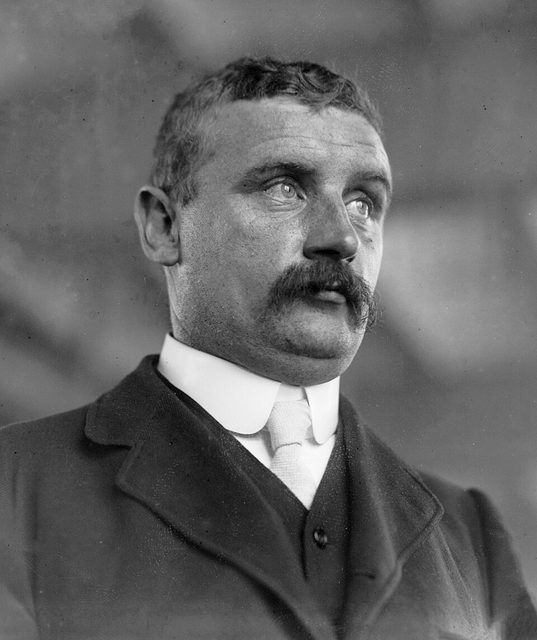
Charles Dixon

Great Britain · born Grantham, Lincolnshire, 1873 · died 1939 · Wimbledon doubles champion at 39 and Davis Cup-winning captain

Olympic gold 1912
Charles Dixon
Bain News Service, publisher, public domain, via Wikimedia Commons

39

His age when he won his first Wimbledon title, the 1912 doubles

30

Years between his first and last Wimbledon, 1896 to 1926

2

Wimbledon all-comers' singles finals, 1901 and 1911

1912

Davis Cup won on grass in Melbourne, as captain

4

Olympic medals, 1908 and 1912

Playing career

Charles Percy Dixon was born in Grantham, Lincolnshire, on 7 February 1873, and was educated at Haileybury and Clare College, Cambridge, where he won a blue for rackets but not for lawn tennis. He became a solicitor and played Wimbledon for the first time in 1896. He reached the all-comers' final in 1901, losing to Arthur Gore, and again in 1911, when he led Herbert Roper Barrett by two sets and lost in five.

His best year came late. In 1912, aged 39, he won three medals at the indoor Olympic tournament in Stockholm, including gold in the mixed doubles with Edith Hannam, then won the Wimbledon doubles with Roper Barrett. At the end of the year he captained the British Isles team that took the Davis Cup from Australasia on grass at the Albert Ground in Melbourne, and won the Australasian doubles with James Cecil Parke at Hastings, New Zealand.

He and Roper Barrett kept the Wimbledon doubles in 1913 and lost the 1914 Challenge Round to Norman Brookes and Tony Wilding. Dixon kept entering Wimbledon after the war and played his last Championships in 1926, aged 53. After retiring from tournaments he coached juniors and umpired at Wimbledon, and became president of the Umpires' Association. He died in West Norwood, London, on 29 April 1939.

On grass

Wimbledon all-comers' finals1901: beat Harold Mahony 6-3, 6-4, 11-9 in the semi-final, lost to Arthur Gore 6-4, 6-0, 6-3. 1911: beat Max Decugis in the semi-final, lost to Herbert Roper Barrett 5-7, 4-6, 6-4, 6-3, 6-1
Wimbledon doubles Challenge RoundsWith Roper Barrett. 1912: beat Max Decugis and André Gobert 3-6, 6-3, 6-4, 7-5. 1913: beat Heinrich Kleinschroth and Friedrich Rahe 6-2, 6-4, 4-6, 6-2. 1914: lost to Norman Brookes and Tony Wilding 6-1, 6-1, 5-7, 8-6
Davis Cup 1912Semi-final against France on grass at Folkestone: beat Decugis 6-3, 6-2, 6-4 and Gobert 4-6, 6-4, 6-2, 6-3, and won the doubles with Roper Barrett. Challenge Round at the Albert Ground, Melbourne: beat Rodney Heath 5-7, 6-4, 6-4, 6-4 and lost to Brookes 6-2, 6-4, 6-4; the British Isles won 3-2
Australasian Championships 1912Doubles final at Hastings, New Zealand, with James Cecil Parke: beat Alfred Beamish and Gordon Lowe 6-4, 6-4, 6-2
Olympics and the PlateBronze in the doubles with Clement Cazalet at the 1908 London Olympics, played on grass. Won the All England Plate in 1914, beating R.W.F. Harding 6-1, 6-2, and lost the 1920 final to Gordon Lowe

Every grass title: 12

Show every title, tournament by tournament
Wimbledon
1912 Men's doubles with Herbert Roper Barrett
1913 Men's doubles with Herbert Roper Barrett
Surrey Championships (Surbiton)
1900 Men's singles
1911 Men's singles†
1912 Men's singles†
1913 Men's singles†
Welsh Championships
1910 Men's singles
1911 Men's singles
1913 Men's singles
1914 Men's singles
Queen's Club
1901 Men's singles
Australian Championships
1912 Men's doubles Australasian Championships with James Cecil Parke

Leading grass titles only: the grass majors, tour-level grass events since 1968 and the leading grass championships before 1968. † single source; ‡ sources disagree. Roll of champions

Anecdotes

The person behind the player.

Cambridge

A blue for the wrong game

At Cambridge he won a blue for rackets, but not for lawn tennis. He was also a scratch golfer, and his brother John captained Nottinghamshire at cricket for many years and won an England cap at football.

Source: Olympedia

Wimbledon 1896

A first match without a game

His first Wimbledon doubles, with Frederick Plaskitt in 1896, ended in a 6-0, 6-0, 6-0 defeat by Clement Cazalet and George Greville. Twelve years later Cazalet was his partner for an Olympic bronze medal.

Source: Wimbledon player archive

Stockholm, 1912

Beating the Wimbledon champion indoors

At the indoor Olympic tournament in Stockholm he beat the reigning Wimbledon champion, Tony Wilding, in the singles semi-final, lost the final to André Gobert, took gold in the mixed doubles with Edith Hannam and bronze in the men's doubles. Two months later he was Wimbledon doubles champion.

Source: Olympedia

Melbourne and Hastings, 1912

Captain on the other side of the world

He led the British Isles team that recaptured the Davis Cup from Australasia at the Albert Ground in Melbourne in November 1912. A month later he and James Cecil Parke won the Australasian doubles at Hastings, New Zealand.

Source: Olympedia

Wimbledon 1921 to 1926

Still entering at 53

In 1921 he partnered Zenzo Shimizu of Japan in the Wimbledon doubles. In 1926, aged 53, he came through two rounds of the doubles qualifying with Frank Wallers before losing in five sets in the first round, thirty years after his first Championships.

Source: Wimbledon player archive

After playing

From the court to the chair

When he stopped playing tournaments he coached juniors and umpired at Wimbledon, and became president of the Umpires' Association.

Source: Wikipedia

Explore

Where they won on grass

Sources

Page updated 4 November 2026. Spotted an error? Send a correction.

Scroll to Top