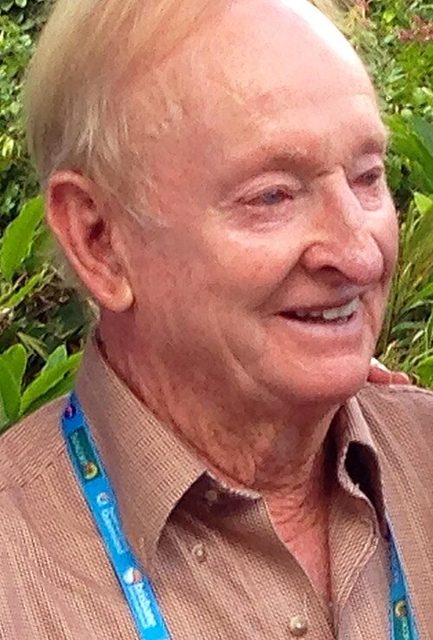
Born in Rockhampton, Queensland, in 1938, the son of a cattleman, Laver was coached by Charlie Hollis and then by Harry Hopman, and won the Australian and US junior titles in 1957. As an amateur he won six major singles titles, among them the calendar Grand Slam of 1962, and played on four Australian Davis Cup winning teams in a row from 1959. He turned professional at the end of 1962, which shut him out of the majors for five years, and was the top professional from 1965. When the majors opened in 1968 he won Wimbledon again, and in 1969 he took a second Grand Slam in a season of 106 wins and 16 losses. He finished with 11 major singles titles and 200 singles titles in all, and entered the Hall of Fame in 1981.
On grass
Major singles titles
9: Wimbledon (1961, 1962, 1968, 1969); Australian (1960, 1962, 1969); US (1962, 1969)
Major singles finals lost
5: Wimbledon 1959, Wimbledon 1960, Australian 1961, US 1960, US 1961
Other grass singles titles
33: US Pro 4 (1964, 1966, 1967, 1968); WA Pro 3 (1964, 1965, 1966); Eastern Grass Court Championships 2 (1960, 1970); NSW Championships 2 (1961, 1970); Newport Pro 2 (1965, 1967); Queen's 2 (1962, 1970); Queensland Championships 2 (1960, 1961); Victorian Championships 2 (1961, 1962); Victorian Pro 2 (1965, 1966); Forest Hills Pro (1966); Irish Championships (1962); New Zealand Championships (1961); Newport (1960); Pennsylvania Championships (1960); Queensland Pro (1966); SA Championships (1961); SA Pro (1965); Southampton (1960); Tasmanian Championships (1962); Tasmanian Pro (1965); World Pro Championships, All England Club (1967)
Major doubles titles
5 doubles (Wimbledon 1, Australian 4), 2 mixed (Wimbledon 2)
Other grass doubles titles
2: US Pro 2 (1963, 1966)
Wimbledon finals won
1961: beat Chuck McKinley 6-3, 6-1, 6-4 in 53 minutes. 1962: beat Martin Mulligan 6-2, 6-2, 6-1. 1968: beat Tony Roche 6-3, 6-4, 6-2. 1969: beat John Newcombe 6-4, 5-7, 6-4, 6-4
Wimbledon finals lost
1959: to Alex Olmedo 6-4, 6-3, 6-4. 1960: to Neale Fraser 6-4, 3-6, 9-7, 7-5
Wimbledon doubles and mixed
Doubles 1971 with Roy Emerson, beating Arthur Ashe and Dennis Ralston in five sets. Mixed 1959 and 1960 with Darlene Hard
Wimbledon Pro 1967
Beat Ken Rosewall 6-2, 6-2, 12-10 in the final of the first professional event on Centre Court
US Open 1969, Forest Hills
Beat Tony Roche 7-9, 6-1, 6-2, 6-2 on rain-softened grass, wearing spikes from the second set, to complete the second Grand Slam
Davis Cup
Four Australian winning teams in a row, 1959 to 1962, and a fifth in 1973; 16 of 20 singles and all four doubles rubbers won
Leading grass titles only: the grass majors, tour-level grass events since 1968 and the leading grass championships before 1968. † single source; ‡ sources disagree. Roll of champions
"I never felt like I was the best, never felt that way. I just happened to have a good year."
Anecdotes
The person behind the player.
Australia · 1950s
The Rocket who wasn't
As a boy Laver was, in his own words, short and skinny, freckle-faced, crooked-nosed, bow-legged and painfully shy, and one of the slower children in his class. Harry Hopman, who drove him through hard training, gave him his nickname as a joke. "He was the Rocket," Hopman said, "because he wasn't."
His second Wimbledon title earned him, as he recalled it, a £15 voucher and a firm handshake. Within months he had signed a $100,000 contract to turn professional, and the Championships were closed to him for the next five years.
When he turned professional the All England Club stripped him of his honorary membership and asked him to stop wearing the green and mauve club tie it had given him in place of prize money. Five years later the club staged an eight-man professional event, and Laver won it, beating Ken Rosewall in the final. "We couldn't wait to get back," he said.
The defending champion lost the first two sets to Premjit Lall of India, then dropped only three games in the last three, winning 3-6, 4-6, 6-3, 6-0, 6-0. He then beat Stan Smith in five sets and Arthur Ashe in four, and took the title against John Newcombe, who had beaten him in the Queen's final a few weeks before.
Rain delayed the final by a day, and a helicopter hovered over the court to dry it. Laver lost the first set to Tony Roche, then asked the referee, Billy Talbert: "I can't stand up. I'm slipping all over. Can I put spikes on?" Talbert agreed, as it was the last match of the event. Roche played on in ordinary shoes, and Laver won in four sets.
With the second Grand Slam won, Laver jumped the net. He had tried the same thing in 1957 and had tripped on the tape and fallen. The US Open president, Alastair Martin, said of him: "You're the greatest in the world, perhaps the greatest we've ever seen."