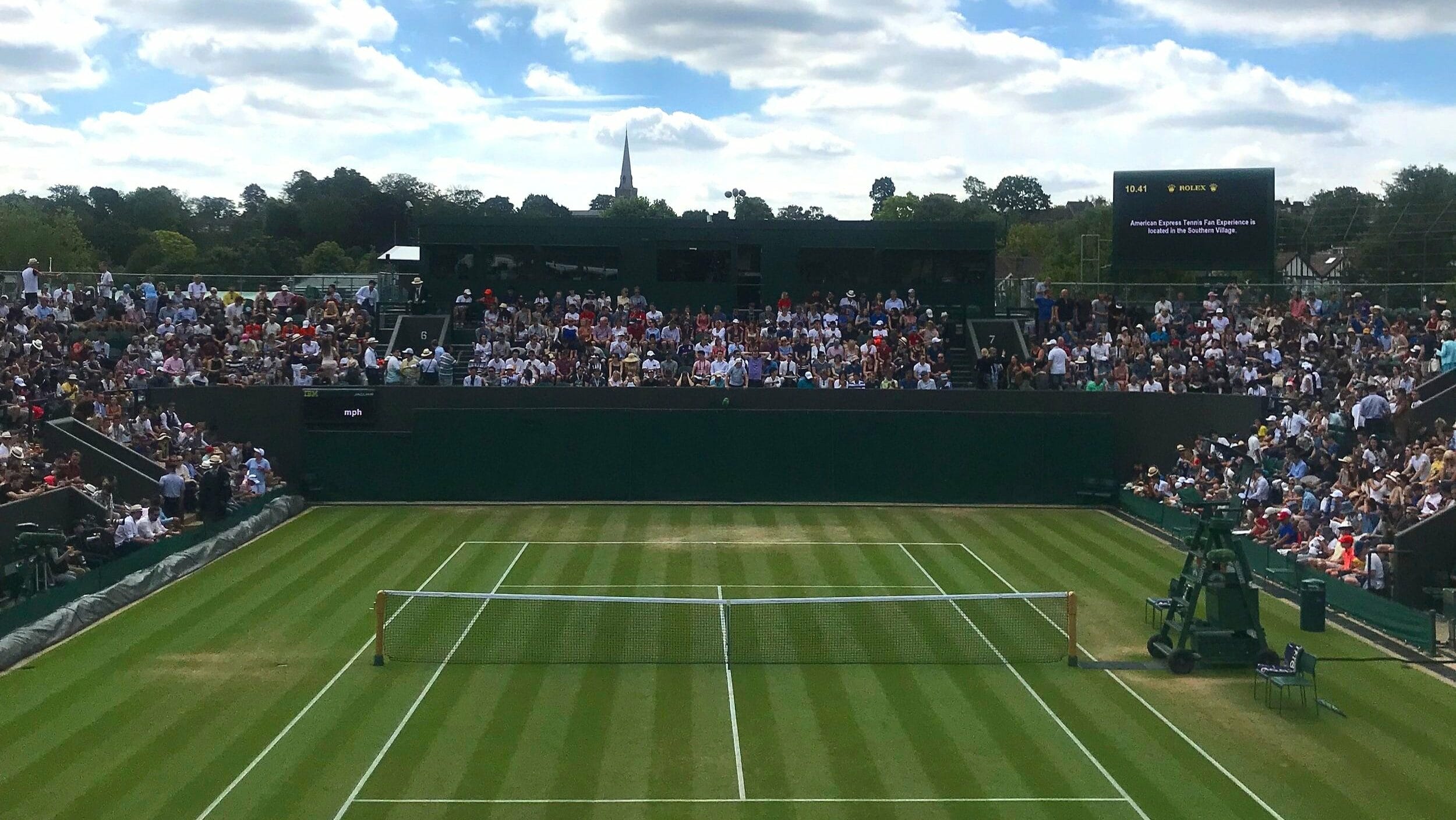
Wimbledon plays on grass because it shapes the match: lower bounce, skidding pace, and first-strike pressure—kept consistent by world-class turf preparation.
For the player, grass is an immediate problem to solve. The ball does not sit up politely; it stays down, it moves through the court, and it asks you to make decisions earlier. That changes everything from return position to rally tolerance. It is why certain patterns—serve plus one, the blocked return, the early backhand—carry extra weight here.
For the tournament, grass is also an operational discipline. Wimbledon’s courts are not left to chance. The surface is prepared to deliver reliability across two intense weeks: durable ryegrass, very short mowing during the event, controlled firmness and moisture, and an annual renovation cycle that restores density and resilience for the next Championships.
So when people ask why Wimbledon still uses grass in 2026, the answer sits in three places at once: tradition, certainly—but also the speed profile it creates, and the tactics it rewards when time is reduced and the strike zone is lower.
The History of Wimbledon Grass Courts
Centre Court looks timeless on television, but the decision to keep Wimbledon on grass is anything but sentimental. Grass remains because it delivers a distinctive form of elite tennis—one defined by low bounce, compressed time, and a premium on first-strike clarity. Wimbledon has also built unrivalled expertise in preparing a living surface to perform consistently under modern physical demands. Put simply, grass still produces a Wimbledon that cannot be replicated elsewhere.
Why Wimbledon Chose Grass in the First Place
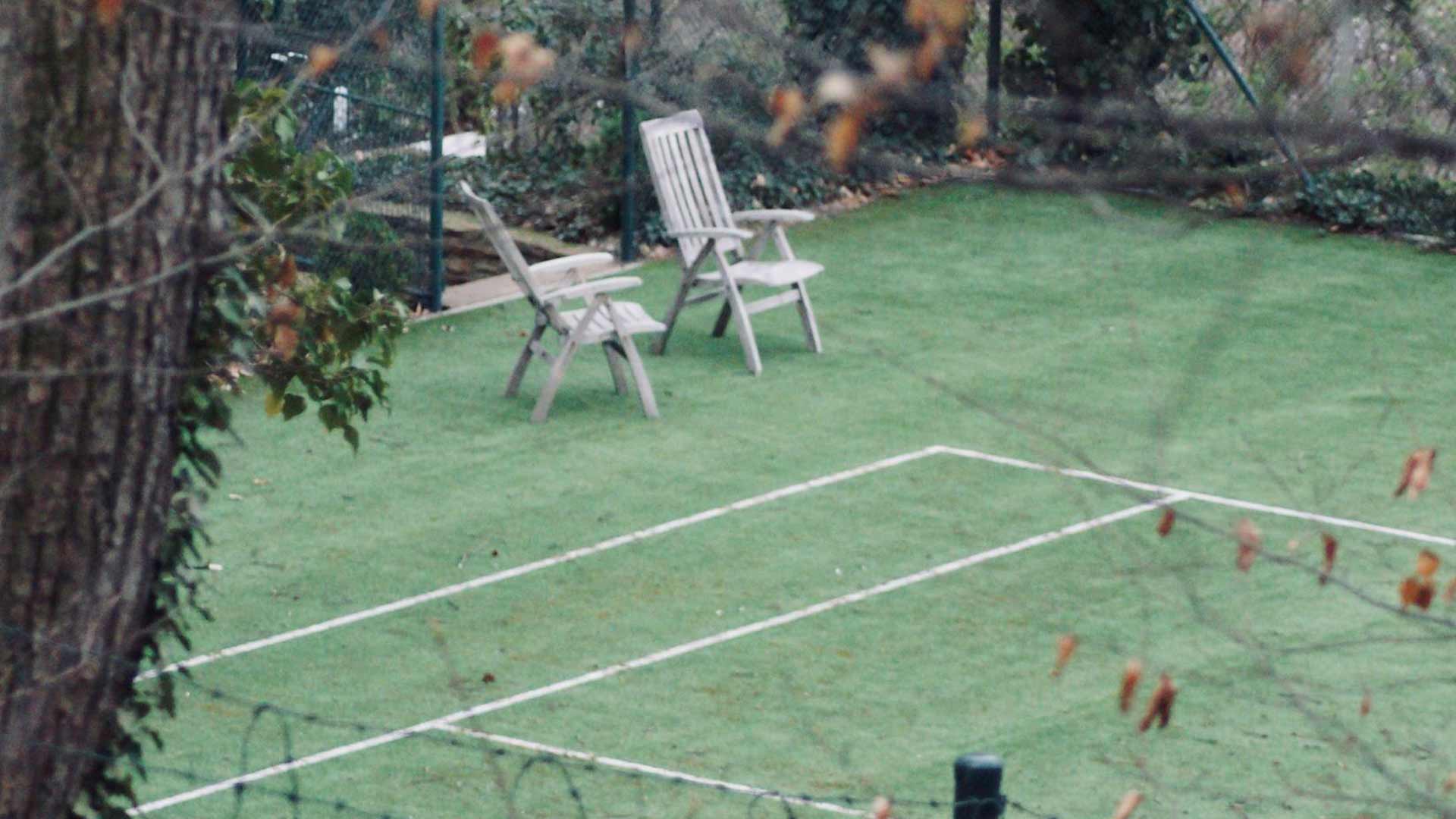
When The Championships began in 1877, the All England Club was already a lawn-sport club, and lawn tennis was exactly that—tennis played on lawns. Grass was the natural surface available in late-Victorian Britain, perfectly aligned with the country-house and club culture that shaped the early game. Wimbledon did not adopt grass as a novelty; it inherited the sport as it was first organised, and then became its most visible custodian.
Why Wimbledon Hasn’t Switched to Clay or Hard Courts
Wimbledon’s resistance to a surface change is best understood in two layers: identity and competition.
First, Wimbledon’s identity is inseparable from grass. The tournament is the only major that still stages the sport on its original surface, and that continuity is not a museum piece—it is a competitive signature.
Second, grass creates a different match. At Wimbledon, the surface changes the geometry of rallies: the ball stays lower, the margin for late contact shrinks, and the returner’s time is reduced. That pressure reshapes tactics from the first point of a match to the last Sunday. A switch to clay or acrylic would not simply modernise Wimbledon; it would remove the surface that makes Wimbledon strategically distinct.
Does Grass Make Tennis Faster Than Hard Courts?
In practical match terms, grass usually plays faster. The reasons are familiar to anyone who has watched a clean striker take the ball early on a slick day: the bounce tends to be lower, and the ball often skids through the court. The result is less set-up time for the receiver and a greater reward for accurate serving and decisive patterns.
The nuance in 2026 is that the “speed gap” is not as extreme as some fans remember from older eras. Court preparation has evolved with the modern game, and Wimbledon’s grass is managed for durability and consistency. Even so, the tactical consequences remain clear: points are frequently decided earlier, and momentum shifts can happen quickly because service games are harder to disrupt.
Why the Ball Bounces Lower on Grass
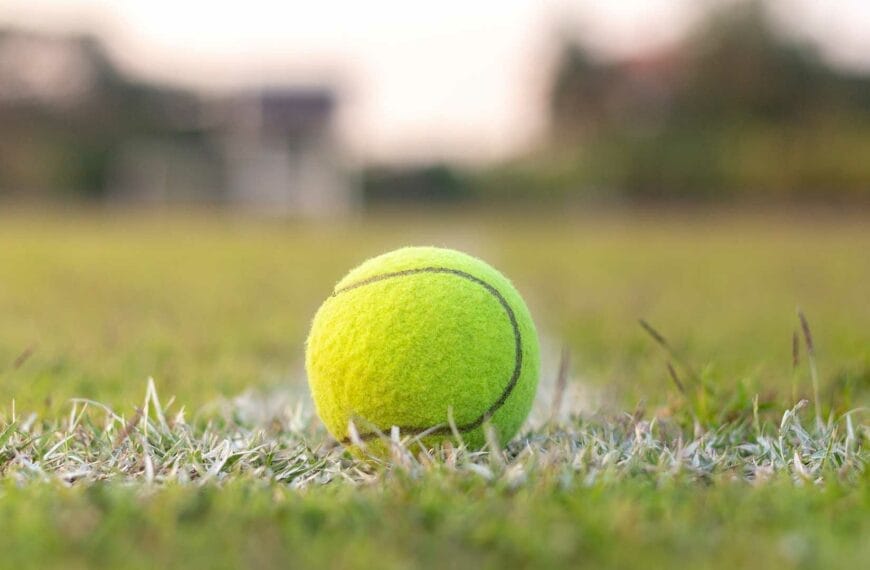
Grass influences bounce in two main ways. First, as a living surface with a plant layer and a structured rootzone beneath, it can absorb more of the ball’s impact energy than a rigid hard court, reducing the vertical rebound. Second, the interaction between the ball’s felt and the grass can offer less “grab” than abrasive acrylic, so the ball tends to travel forward with a skidding rebound rather than climbing sharply.
This is why Wimbledon so often becomes a contest of strike zones. Players who prefer waist-high contact points must adjust; players comfortable taking the ball below the hip often find the court speaks their language.
How Wimbledon Groundskeepers Keep Grass Playable
The quality of Wimbledon’s grass is a technical achievement. The objective is simple to state and demanding to deliver: a surface that is consistent, safe underfoot, and resilient across two weeks of world-class tennis. That is why Wimbledon plays on grass.
Key elements include:
- Grass choice: Wimbledon uses perennial ryegrass, selected for its wear tolerance and ability to hold together under heavy movement and repeated play.
- Mowing height: During the tournament, courts are kept at a very short cut (widely reported as around 8mm), encouraging uniform ball contact and predictable skid.
- Firmness and moisture control: Watering and surface management aim for a court that is firm enough to play consistently while keeping the turf healthy. Too soft and the surface becomes unreliable; too dry and it risks stress and damage.
- Renovation cycle: Wimbledon’s courts are not casually “freshened up.” They are renewed on a planned annual cycle—reseeding, recovery, and preparation—so the next Championships begin with density and strength.
This work is largely invisible to viewers, which is precisely the point. The best grass court is one the audience doesn’t have to think about; the tennis becomes the story.
Has Wimbledon Ever Considered Changing Surface?
There is no strong public evidence that Wimbledon has seriously pursued a move away from grass in modern times. What has changed, notably, is how grass is prepared and supported to meet the demands of contemporary play—more physical, more baseline-heavy, and more punishing on the turf. Wimbledon has modernised the surface by improving durability and consistency, while keeping grass as the defining characteristic of the event.
What Grass Rewards: The Wimbledon Tactical Profile
Grass does not reward one style exclusively, but it does consistently favour certain qualities:
- Serve quality and first-ball patterns: Holding serve is often easier, and return games demand exceptional clarity.
- Early timing: Players who take the ball early, especially on the backhand return and the first forehand, can seize control quickly.
- Transition skill: Half-volleys, blocked returns, and sharp movement into the forecourt matter more than on slower surfaces.
- Footwork under uncertainty: The best movers on grass look quiet through the hips and feet—balanced, precise, and ready to adjust.
Wimbledon champions tend to be the players who manage time best: those who deny it to opponents and use it efficiently themselves.
FAQ
Why did Wimbledon choose grass in the first place?
Because early lawn tennis was played on lawns, and the All England Club’s grounds were grass when The Championships began in 1877. Grass was the standard surface for the sport’s early organised era.
Why hasn’t Wimbledon switched to clay or hard courts?
Grass is central to Wimbledon’s identity and produces a distinct style of match play—lower bounce, skidding rebounds, and greater emphasis on first-strike tactics. Switching surfaces would remove that competitive signature.
Does grass make tennis faster than hard courts?
Usually, yes, in match effect: the ball often stays lower and skids through, reducing reaction time. Modern preparation has narrowed extremes compared to earlier decades, but grass still compresses time and rewards decisiveness.
How do Wimbledon groundskeepers keep the grass playable?
By using durable ryegrass, maintaining a very short cut during the tournament, controlling firmness and moisture carefully, and renewing courts on an annual cycle to ensure density and resilience.
Why does the ball bounce lower on grass?
Grass and the underlying structure can absorb more impact energy and provide less “grab” than abrasive hard courts, leading to a lower rebound and more forward skid.
Has Wimbledon ever considered changing the surface?
There is no clear public indication of serious modern plans to change from grass. Wimbledon has instead focused on evolving how the grass is managed for consistency and durability.