Grass singles titles in 1930: the Longwood Bowl and Seabright
5
Years in the US top ten, 1928 to 1932
Playing career
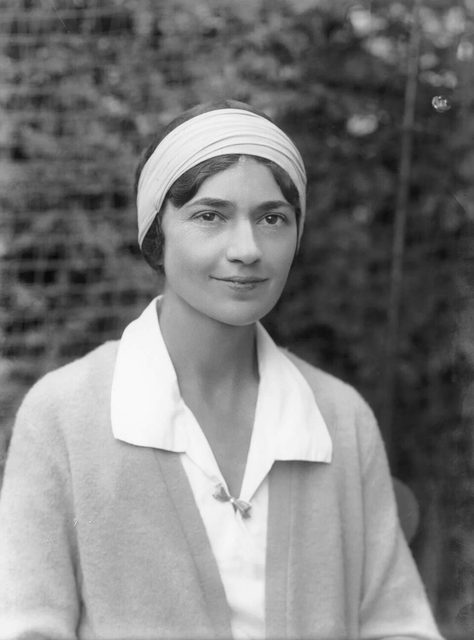
Anna Virginia McCune was born in Santa Barbara, California, on 2 July 1902 and learned the game with her sister Lucy in Pacific Grove. She was already a good player when she entered the University of California, Berkeley, in 1920, and she graduated in 1924 with Phi Beta Kappa honours. In 1925 she married Lawrence Harper, a Berkeley history professor.
A left-hander, she was ranked in the US top ten for five years running from 1928 to 1932 and was No. 1 in 1930. She won the Pacific Coast singles title in 1929, and in the summer of 1930 won two Eastern grass tournaments, the Longwood Bowl and the Seabright Invitational, and reached the final of the US Championships, losing to Betty Nuthall. She was a doubles finalist at the US Championships with Edith Cross, and in 1931 she won the Wimbledon mixed doubles with George Lott. She played for the United States in the Wightman Cup in 1931 and 1932.
In 1932, at the top of her game, she was called home by an illness in the family and gave up tournament tennis to raise three children. She was national president of the Sigma Kappa sorority from 1939 to 1942 and was inducted into the Cal Athletics Hall of Fame in 1981. She died in Moraga, California, on 14 June 1999.
On grass
Wimbledon mixed final 1931
With George Lott, unseeded: beat Ian Collins and Joan Ridley 6-3, 1-6, 6-1
US Championships
Singles final 1930, lost to Betty Nuthall 6-1, 6-4; quarter-finals in 1931 and 1932. Women's doubles finals with Edith Cross in 1928 and 1930, and mixed doubles final with Wilmer Allison in 1931
Leading grass titles only: the grass majors, tour-level grass events since 1968 and the leading grass championships before 1968. † single source; ‡ sources disagree. Roll of champions
"Life changed for us then."
Anecdotes
The person behind the player.
Pacific Grove
Cheaper to play than to watch
She and her sister Lucy entered the California State Championships partly to save money: "we thought it would be cheaper to see all the matches as participants rather than pay for spectators' tickets." They won the women's doubles and both went far in the singles.
Her first trip to the Eastern grass-court circuit, in 1928, meant about six days on the train across the country, then a week of practice to recover. "You didn't get jet lag," she said later.
In 1932 she was at the top of her game when an illness in the family called her home. She gave up tournament play to raise three children, though she kept following the game for the rest of her life.
She led the Sigma Kappa sorority as national president from 1939 to 1942. A scholarship in her name is awarded each year at the University of California to a woman who is both an outstanding athlete and an outstanding student. At 81 she had knee surgery so that she could keep playing.