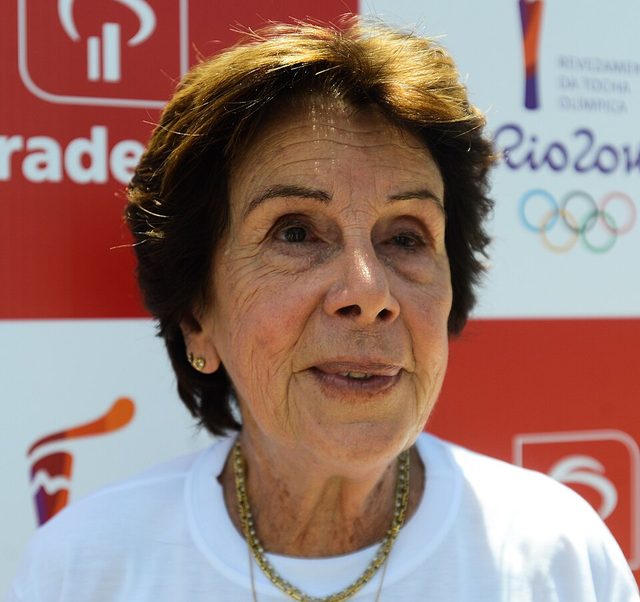
Born in São Paulo in 1939, Bueno learned the game at a club across the road from her home, with no formal coaching, and won Brazil's women's singles title at 15. In 1958 she won the Italian Championships and the Wimbledon doubles with Althea Gibson. She went on to win seven major singles titles, three at Wimbledon and four at the US Championships, and finished 1959 and 1960 as world No. 1; in 1960 she won all four major women's doubles titles. Illness kept her out for much of 1961, and arm and leg injuries limited her after 1968. She won the 1974 Japan Open, her only professional title, and retired in 1977. She entered the International Tennis Hall of Fame in 1978, later commentated for SporTV and died in São Paulo in 2018.
On grass
Major singles titles
7: Wimbledon (1959, 1960, 1964); US (1959, 1963, 1964, 1966)
Major singles finals lost
4: Wimbledon 1965, Wimbledon 1966, Australian 1965, US 1960
Leading grass titles only: the grass majors, tour-level grass events since 1968 and the leading grass championships before 1968. † single source; ‡ sources disagree. Roll of champions
"No woman has hit so many beautiful and piercing volleys."
Anecdotes
The person behind the player.
São Paulo 1959
A parade and a stamp
After her first Wimbledon singles title Brazil gave her a ticker-tape parade through São Paulo, the country's president honoured her and the postal service put her on a stamp. The Associated Press named her its Female Athlete of the Year for 1959, the year she also won the US Championships.
In 1957, at 17, she travelled to Florida on her own to play the Orange Bowl, and won it. Her first trip to Europe followed in 1958, when she won the Italian Championships and then her first major title, the Wimbledon doubles with Althea Gibson.
Largely self-taught, she studied a book of photographs of Bill Tilden's serve and copied the top players who came through São Paulo. A formal arrangement with the Australian coach Harry Hopman, and his hard training regime, ended within a week; she preferred the beach.
Back from injury, she raised her racquet on Centre Court and the crowd saw a pink lining and matching pink underwear beneath her white dress. The design was Ted Tinling's, and it broke no written rule. Wimbledon brought in a "predominantly white" requirement for the following year's Championships.
Tinling, who had umpired Suzanne Lenglen in the 1920s, designed for her throughout the decade and often made her a new dress for each match. She said she once wore 21 of his designs at one tournament and kept hundreds of them at home. Tinling saw her as Lenglen's successor.
Margaret Smith had won all four of their meetings in 1962, three in deciding sets. In the 1964 Wimbledon final Bueno beat her 6-4, 7-9, 6-3, calling it "three sets against the best of the world". The two met 22 times, and Bueno said they brought out the best in each other.