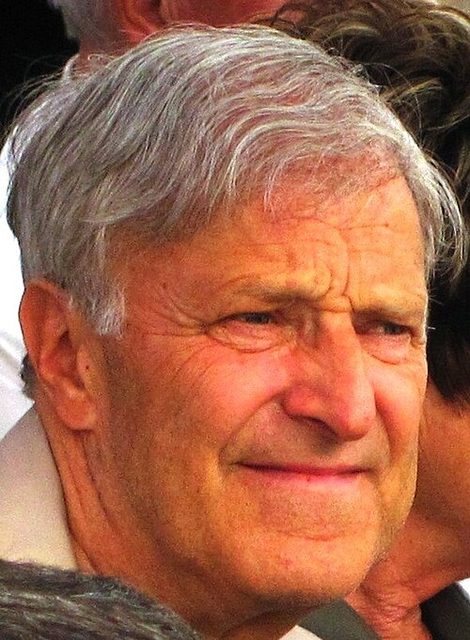
Major singles titles: Roland Garros 1970 and 1971, Wimbledon 1973
15 to 2
His Wimbledon seeding in 1973, before and after the boycott
2
Five-set wins on the way to the 1973 final, over Vijay Amritraj and Roger Taylor
2
US Open finals at Forest Hills, 1971 and 1973
5
Career-high world ranking, 1973
Playing career
Jan Kodeš was born in Prague on 1 March 1946. He grew up in communist Czechoslovakia, where his father, a lawyer, was made to work in a factory, and he studied economics at university while his tennis career took off. He won the French Championships at Roland Garros in 1970, beating Željko Franulović 6-2, 6-4, 6-0, and again in 1971, beating Ilie Năstase. He never played the Australian Open.
He had a reputation as a clay court player, and he did not like grass. He began to change it at the 1971 US Open at Forest Hills, beating the top seed John Newcombe in the first round and Arthur Ashe in the semi-finals before losing the final to Stan Smith. At Wimbledon he reached the semi-finals in 1972, losing to Smith, and in 1973, when most of the leading men boycotted the Championships, he won the title, beating Alex Metreveli 6-1, 9-8, 6-3 in the final. Two months later he reached a second Forest Hills final and lost to Newcombe in five sets after leading two sets to one.
He reached No. 5 in the world in 1973 and was Czechoslovakia's top player for 12 years. He played Davis Cup from 1966 to 1980, lost the 1975 final to Sweden and won the Cup in 1980 when Czechoslovakia beat Italy 4-1 in Prague. He captained the team from 1982 to 1987. He entered the International Tennis Hall of Fame in 1990.
On grass
Wimbledon 1973
Beat Kenichi Hirai, Pietro Marzano, John Yuill and Jaidip Mukerjea; quarter-final: beat Vijay Amritraj 6-4, 3-6, 4-6, 6-3, 7-5; semi-final: beat Roger Taylor 8-9, 9-7, 5-7, 6-4, 7-5; final: beat Alex Metreveli 6-1, 9-8 (7-5), 6-3 in 110 minutes. Rain on the second Friday put both singles finals back to the Saturday
Wimbledon 1972
Seeded fifth; beat Onny Parun 6-2, 6-3, 6-4 in the quarter-finals, lost to Stan Smith 3-6, 6-4, 6-1, 7-5 in the semi-finals
US Open 1971
At Forest Hills: beat top seed John Newcombe in the first round and Arthur Ashe in five sets in the semi-finals; lost the final on grass to Stan Smith 3-6, 6-3, 6-2, 7-6, the first US Open final to end in a tiebreak
US Open 1973
At Forest Hills: beat Nikola Pilić and Stan Smith, then lost the final to John Newcombe 6-4, 1-6, 4-6, 6-2, 6-3
Ceremonies
Opened the 1974 Championships on the Centre Court as holder, against Sherwood Stewart; paraded with the surviving champions at the 1977 centenary and the 2022 Centre Court centenary
Leading grass titles only: the grass majors, tour-level grass events since 1968 and the leading grass championships before 1968. † single source; ‡ sources disagree. Roll of champions
"Wimbledon psychologically is more important than my two French Opens."
Anecdotes
The person behind the player.
Prague, 1950s
Shut out of school
His father, a lawyer, was forced to work in a factory because the authorities suspected him of capitalist sympathies. Kodeš himself was refused a place at secondary school because he had not joined a communist youth organisation, and he worked in a factory before tennis success let him go on to higher education.
Kodeš never played the Australian Open. The Czechoslovak sports bureau, which largely decided where he played, judged the plane fare too expensive. The year after he won Wimbledon he was made to report for military service.
Kodeš did not join the boycott: "I was not a member of ATP. Pilic was suspended by the ITF." Looking back he said: "So I think the ATP's decision to boycott was not right." Asked whether the empty draw had helped him, he said: "I didn't think about that at all."
Before the 1971 US Open, he recalled, "Everybody had been saying that I am only a clay-courter." The seeding committee thought he could not play well on grass. Beating Newcombe and Ashe on the way to the final was, he said, "the turning point in my mind".
Kodeš played Davis Cup for Czechoslovakia from 1966 to 1980. After losing the 1975 final in Stockholm, the team won the Cup at home in Prague in 1980, beating Italy 4-1. He wrote: "We did not triumph in Stockholm but we accomplished it in Prague."