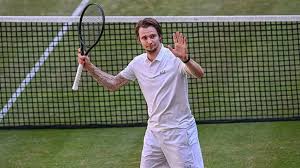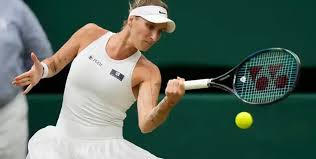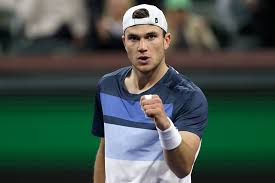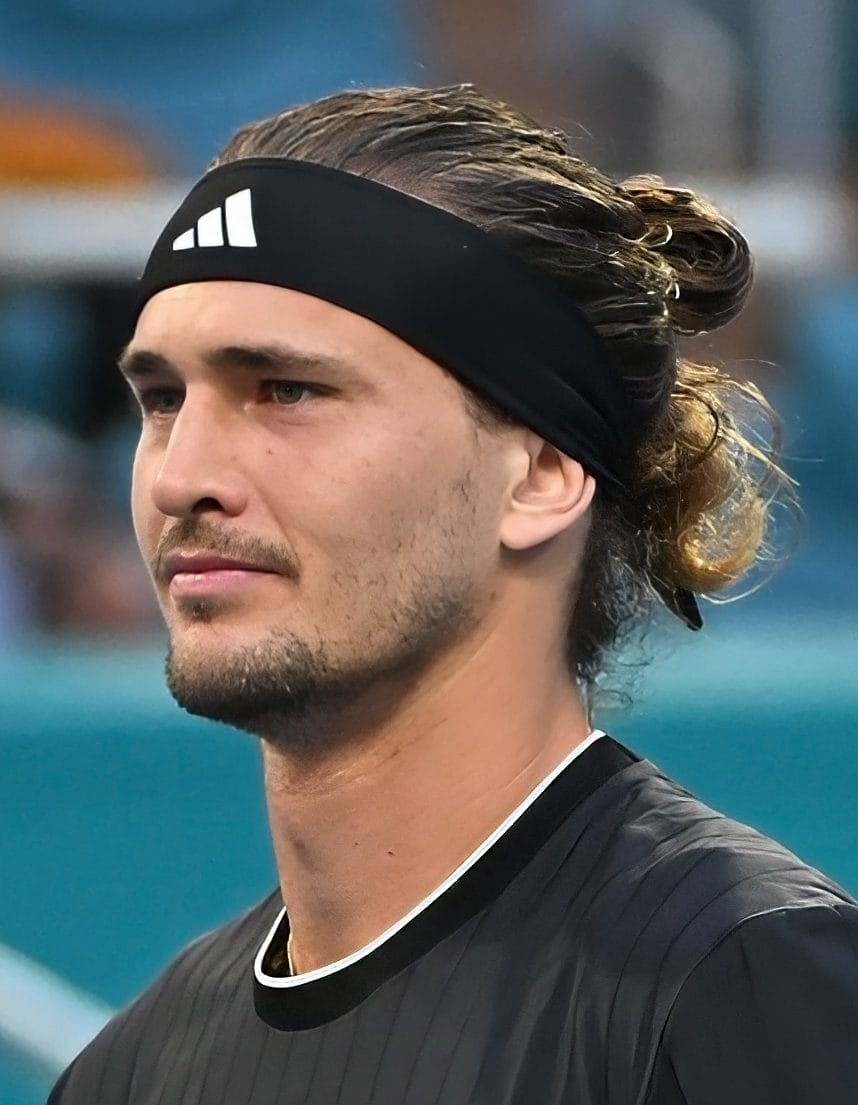
Alexander Zverev spent a decade as a big server whose grass results trailed his standing, and 2026 was the summer that gap finally closed. A first Wimbledon final, reached a month after his maiden major at Roland Garros, lifted him from 9th to 3rd in the men’s GTC Grass Rankings with a GTC Grass Rating of 126.
Grass at a glance
- GTC Grass Rating: 126, 3rd in the men’s rankings (9th before the season, on 111)
- Pillars: Lawn Form 90, Arsenal 80, Wimbledon 78, Nerve 70
- Nationality: Germany
- Best Wimbledon result: Runner-up (2026)
- Grass titles: None yet; Halle runner-up in 2016 and 2017
- Plays: Right-handed, two-handed backhand
How Alexander plays on grass
The serve is the base of everything. From his height the first delivery comes down steeply, and on a fast court it buys him free points and long runs of comfortable holds. His two-handed backhand is the best rally shot he owns: flat, compact and low over the net, it keeps its pace through the court and is hard to attack on a surface that rewards depth. That pairing is why his Arsenal pillar sits at 80.
Grass has always asked harder questions of the rest of his game. He likes to return from well behind the baseline, which costs him time against big servers, and his forehand and second serve can tighten when matches turn. As a tall player he also has to work to get down to low, skidding balls. In 2026 he stood a little closer, took returns earlier and used the backhand down the line to open the court.
His Nerve score of 70 reflects a mixed picture. He won the first-set tie-break of the Wimbledon final and dropped only two points in the tie-break that opened his semi-final, yet the second-set tie-break of the final, lost 7-2, decided the title. Against the very best on grass the margins still run against him.
Grass record
Before 2026 Wimbledon was the only major where Zverev had never reached the semi-finals. His best runs there were to the fourth round in 2017 and 2021, and he lost in the first round in 2025. His grass résumé rested mainly on Halle, where he reached the final in 2016, losing to Florian Mayer, and again in 2017, when Roger Federer beat him.
The other recurring problem was Taylor Fritz. The American had beaten him seven times in a row, a run that began on grass at Wimbledon in 2024.
The 2026 grass season
Zverev did not play Stuttgart, which began the week after his Roland Garros title, and his rating held at 111. He opened at Halle with a 6-3, 4-6, 6-2 win over Vit Kopriva and reached a third consecutive semi-final there, extending his winning streak since Paris to 10 matches. Fritz ended it again, 7-6(4), 4-6, 5-7 from Zverev’s side, but the week still moved him to 114.
At Wimbledon he was the 2nd seed and played his most complete grass tennis. He finally beat Fritz, 6-4, 6-4, 6-2 in the quarter-final, then ended the run of British wildcard Arthur Fery 7-6(0), 6-2, 6-4. In the final he took the opening set from Jannik Sinner on a 9-7 tie-break before losing 7-6(7), 6-7(2), 3-6, 4-6 in three hours 46 minutes. He slipped and appeared to hurt his right knee in the third set but played on without a medical timeout. The final took his rating from 114 to 126.
Looking ahead to 2027
The task for 2027 is to turn a breakthrough into a pattern. Halle followed by Wimbledon is the likely schedule, and a first grass title of any kind is the obvious gap in his record. The match-up with Sinner, who has now won 10 straight meetings, is the ceiling: Zverev needs a more aggressive return position and a steadier second serve in the big moments to close it. A realistic target is another Wimbledon semi-final and a place in the top 3 of the GTC list, with the knee scare from the final worth monitoring.