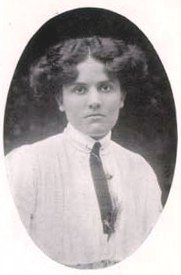
Olympic silver medal in the outdoor singles at the All England Club
6-0, 6-0
Her 1911 Challenge Round defeat, the first such score in a major singles final
1913
Wimbledon doubles champion with Winifred McNair
Playing career
Penelope Dora Harvey Boothby was born in Finchley, Middlesex, on 2 August 1881 and grew up with her sister Gertrude in the home of her step-parents, Harry and Gertrude Penn, later moving to South Norwood. She learned at the Harold Road club and practised at Beulah Hill. A gifted all-rounder, she reached the All-England table tennis final in 1903 and won the All England badminton mixed doubles in 1909.
She first played Wimbledon in 1904. In 1908 she reached the semi-finals and, just over a week later, took the Olympic silver medal in the outdoor singles at the All England Club. In 1909, with Charlotte Sterry not defending, she won the title by beating Agnes Morton in the All-Comers final, and that year also won the British Covered Court title at Queen's and the South of England Championships at Eastbourne.
Dorothea Lambert Chambers beat her in the Challenge Round in 1910 and again in 1911, the second time 6-0, 6-0. She won the Wimbledon doubles with Winifred McNair in 1913 and played her last Wimbledon in 1922. She married Arthur Geen in 1914, later coached professionally, designed the first official Wightman Cup jackets for Great Britain in 1929, and died in London on 22 February 1970.
On grass
Wimbledon 1909
All-Comers final: beat Agnes Morton 6-4, 4-6, 8-6. The holder Charlotte Sterry did not defend, so the All-Comers winner took the title
Wimbledon finals lost
1910 Challenge Round: lost to Dorothea Lambert Chambers 6-2, 6-2. 1911: beat Edith Hannam in the All-Comers final, then lost to Lambert Chambers 6-0, 6-0, the first such scoreline in a major singles final
Wimbledon doubles 1913
With Winifred McNair, won the final against Charlotte Sterry and Dorothea Lambert Chambers, who led 6-4, 4-2 when Sterry retired with a torn tendon
1908 Olympic Games
Silver in the outdoor singles at the All England Club, after byes in the first two rounds and a straight-sets defeat by Lambert Chambers in the final
Season of 1909
Also won the South of England Championships at Eastbourne, beating Charlotte Sterry 6-3, 6-4, and the Kent Championships at Beckenham, beating Agnes Morton 6-4, 6-4
Leading grass titles only: the grass majors, tour-level grass events since 1968 and the leading grass championships before 1968. † single source; ‡ sources disagree. Roll of champions
"life wouldn't be worth living under such conditions"
Anecdotes
The person behind the player.
South Norwood, July 1909
Twelve lines on an inner page
Her Wimbledon title reached her home district in twelve lines halfway down a column on an inner page of the Norwood News, under the headline "Lawn Tennis Championship Won By A Norwood Lady". The paper gave her address as Holmwood, 260 South Norwood Hill.
Asked about her fitness regime, she denied dieting or any special training and said she used a little common sense about what to avoid and when to avoid it. She did not train in winter: when the season finished she exchanged her tennis racquet for a badminton one.
She admitted to suffering at first from what she called centre-courtitis, and said that everyone who played did at first, when the eyes of a great crowd were upon them. She was surprised by the public interest in the game and touched by the letters and telegrams that followed her win.
Josiah Ritchie, the men's All-Comers winner that year, also lived in Norwood. "Norwood was quite to the front at Wimbledon this year," she said, noting that he had won the All-Comers before losing to Arthur Gore in the Challenge Round.
Before she made her name at tennis she reached the All-England ladies' table tennis final at Crystal Palace in 1903, losing to Helen Madden. In 1909, the year of her Wimbledon title, she also won the All England badminton mixed doubles with Albert Prebble.
In 1929 she designed the first official team jackets for the Great Britain Wightman Cup team and travelled with the team to Forest Hills, though she did not play. In 1932 she turned to coaching as a profession.