Hybrid grass is a natural grass surface reinforced with a small proportion of synthetic fibre, either stitched into the soil, mixed through the rootzone or held in a backing mat. The grass is still living turf that is mown, fed and renovated; the fibres hold the plants and the surface together under wear. For tennis it is still rare: the All England Lawn Tennis Club (AELTC) has trial hybrid courts, and a few clubs in England and France have built or reinforced courts this way, but there is little published playing data for tennis.
What hybrid grass is
Every hybrid system combines a natural grass sward with synthetic material below or within it. Three main types are used in sport.
Stitched systems
A machine stitches individual synthetic fibres vertically into an established natural surface on a regular grid. One manufacturer publishes stitching depths of 45 to 180 mm (about 1.8 to 7 in) and grid spacings from 20 by 10 mm to 20 by 30 mm. On cricket pitches the Grounds Management Association (GMA) describes a typical grid of 20 by 20 mm to about 90 mm deep. The finished surface is roughly 95 per cent natural grass by area, with the fibre tips standing at about the cut height of the grass.
Fibre-mixed rootzones
Short synthetic fibres are blended through the sand or sand and soil rootzone before the grass is sown or laid. A widely used UK product mixes silica sand with polypropylene fibres about 35 mm long, at roughly 0.25 to 0.35 per cent by weight. Other systems add materials such as cork for shock absorption. The fibres give the rootzone three-dimensional strength, so it resists shearing and compaction under feet.
Carpet-backed systems
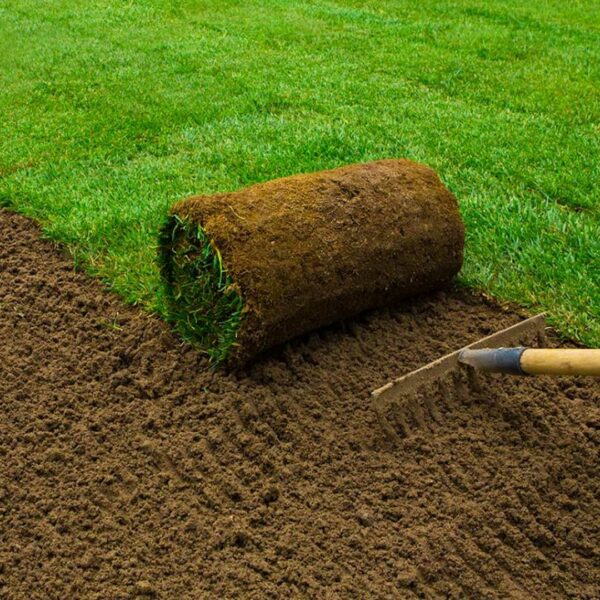
A synthetic mat with fibres projecting upwards is laid horizontally, infilled with sand rootzone, then seeded or (for warm-season grasses) planted with stolons. Some products are grown off site and lifted as thick, ready-to-play turf.
How hybrid differs from synthetic grass
Synthetic grass is entirely plastic: a woven or tufted carpet, usually sand-filled, with no living plant and no mowing, rolling or seeding. Hybrid grass is a living natural surface that happens to contain some plastic. It needs light, water, nutrients and the full maintenance calendar, and it plays like grass because the ball lands on grass. The comparison of natural and artificial surfaces is covered in our guide to natural versus artificial grass tennis courts.
Where hybrid grass is used in sport
Most hybrid installations are football and rugby pitches, where stadium surfaces need to survive heavy fixture lists. Stitched systems are also used on cricket squares and golf tees. Tennis is a small market: manufacturers list tennis among the sports they serve, but very few tennis installations are documented.
Hybrid grass in tennis: what is known
AELTC trials
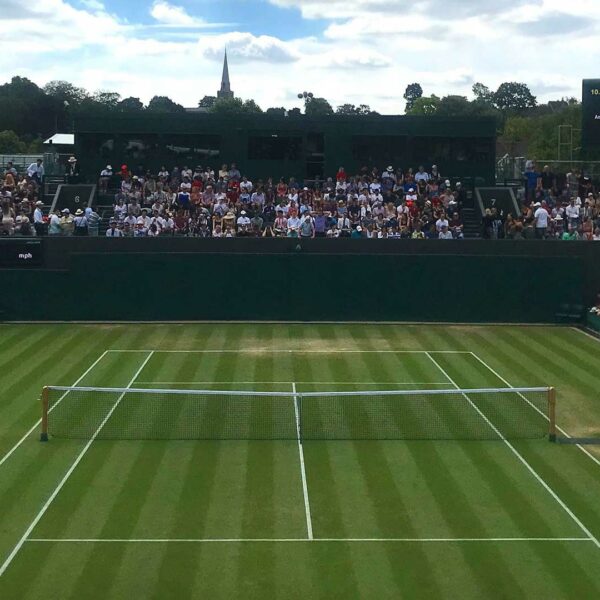
The AELTC has funded research with the Sports Turf Research Institute (STRI) comparing hybrid and traditional grass courts. Trials began on small plots at STRI in Yorkshire in 2016. Construction of hybrid courts at the AELTC grounds at Raynes Park started in 2020, and the courts were first played on in 2021, with STRI measuring hardness, ball bounce, ball height and ball speed. Neil Stubley, the AELTC Head of Courts and Horticulture, has said the stitch system is most useful in sandier soils, where it makes the surface more stable. He has also said that a more free-draining soil could extend the UK grass season by four to six weeks. Stubley has said hybrid surfaces are not expected at The Championships in the near future; the aim is better grass courts elsewhere and more grass practice for juniors.
Lawn Tennis Club de Deauville, France
The Lawn Tennis Club de Deauville in Normandy was delivered in June 2016 with nine grass courts on a fibred substrate (“gazon et substrat fibré”) and two clay courts. The architect’s project page lists Naturalgrass as the sports surface contractor and notes that the grass installation drew on advice from Wimbledon’s technical services. The club itself was placed in judicial liquidation in November 2019 because of debts from the launch; the courts belong to the town and the local authority, which said the site’s future depended on finding a new operator.
Hurlingham Club, London
A stitching manufacturer reports reinforcing a tennis court at the Hurlingham Club in March 2020, and quotes a club representative describing stitching into the base of problem courts as a success. No independent playing data has been published.
Other hybrid tennis installations are claimed by suppliers, but we could not verify them independently, so they are not listed here.
Pros and cons for a tennis court
Advantages
- Wear tolerance. On cricket pitches the GMA reports about four times the wear resistance of unstitched pitches on the same soil, with faster recovery because fibres hold the plants in place. Tennis wear concentrates on the baseline and service line, so the same principle applies, though no tennis figure has been published.
- Stability on sandier soils. Traditional courts rely on heavy, clay-rich loam for firmness. Fibres let a more free-draining rootzone stay stable, which is why the AELTC sees possible season extension. See the best soil for grass courts.
- Drainage. Stitched profiles infiltrate water faster and deeper, helping after rain and at germination.
- Consistency. The GMA reports more consistent pace and bounce on stitched cricket pitches over a season, because the surface deteriorates more slowly.
Disadvantages and limits
- Bounce and hardness are not yet proven for tennis. Reinforcement can make a surface firmer at first, and research notes that some reinforced surfaces become excessively hard. A tennis court is judged on bounce, so measure hardness and rebound before and after installation.
- Mowing height floor. Fibres do not regrow, so you must not mow below the fibre height. On cricket pitches installation height is usually 5 to 6 mm; a tennis court mown at about 8 mm (5/16 in), the AELTC Championship height, needs fibres set to suit. See mowing grass tennis courts.
- Renovation limits. Horizontal planing rotors (fraise mowing) must not be used because they strip the fibres. Scarifying must be set so it cleans around fibres without tearing them out; manufacturers say annual removal of organic matter is still needed.
- Aeration limits. Deep aerators need reduced “kick” so they do not rip the system, and hollow tines may not pass through a carpet backing. Profiles are often firmer and need more aeration. See aerating your grass court.
- Water. Faster infiltration means more irrigation.
- Site preparation. For stitching, the soil must be stone free to at least 100 mm (4 in), levels must be corrected first because the machine follows the surface, and thatch over 5 mm must be removed.
- Cost. Material and installation cost more than a conventional court, and specialist maintenance may be needed. We found no published per-court price for tennis.
Timing and practical steps
Stitching needs moist, workable soil. In the UK the GMA gives two windows for cricket: late February to early April before the season, or late October to November after it. In Australia the equivalent windows fall in late winter to early spring and in autumn, after the grass season ends. The court should rest after stitching so roots bind around the fibres, and heavily worn areas may need hand stitching after two or three seasons. Manufacturers claim a life of eight years or more with correct maintenance.
Before committing, ask for soil analysis, a written maintenance programme, a list of machines that can and cannot be used, and contact details for existing tennis installations. Agree hardness and ball rebound targets and have them measured independently. Hybrid reinforcement does not fix poor drainage or poor levels; those come first, as covered in lawn tennis court drainage. Our guide to repairing worn grass courts covers the conventional alternative for baseline wear. The supplier directory at grasstennisclub.com/suppliers lists contractors by category.
Key points
- Hybrid grass is living turf reinforced with about 5 per cent synthetic fibre; synthetic grass has no living plant.
- Systems are stitched, fibre-mixed rootzone or carpet backed.
- Documented tennis use is limited: AELTC trial courts at Raynes Park, the Deauville courts (2016) and a reinforced court at the Hurlingham Club.
- Main gains are wear tolerance and stability on free-draining soils; main limits are mowing height, renovation methods and cost.
- There is no published tennis bounce data yet, so measure your own.
Sources
- Agence Schneider: Club de tennis sur gazon, Deauville
- Tendance Ouest: Deauville, le Lawn Tennis Club jette l’éponge (November 2019)
- Sportsfields.info: Wimbledon test hybrid courts to bring grass courts to the world
- LBC: Adding artificial fibres to grass could see Wimbledon-style courts around world (June 2022)
- STRI Group: work with the All England Lawn Tennis Club
- SIS Pitches: hybrid grass tennis courts (manufacturer page)
- SIS Pitches: 2020 project portfolio
- SIS Pitches: SISGrass Lite stitching depths and spacings (manufacturer page)
- Grounds Management Association: What are hybrid pitches?
- Sports Engineering: What is hybrid grass?
- Baker, S. (2002) Athletic field problems and their solution in the United Kingdom, Rutgers Turfgrass Proceedings
- Pitchcare: The F Plan (fibre reinforced rootzones)
- Natural Grass: AirFibr (manufacturer page)
- AELTC: Media Fact Sheet, Grounds 2023