
The Science Behind Advanced Soil Moisture Monitoring Systems
I. Introduction to Advanced Soil Moisture Monitoring Systems
Soil moisture monitoring systems have revolutionised practices by providing real-time data on soil water content, enabling them to make informed decisions that optimise grass conditions and reduce water waste. These advanced systems utilise cutting-edge technologies, including sensors and artificial intelligence, to monitor soil moisture levels, temperature, and other critical factors affecting growth.
The integration of advanced soil moisture monitoring systems has transformed irrigation by enabling the detection of early signs of stress, the identification of waterlogging, and the adjustment of watering schedules accordingly. By leveraging this technology, maintenance managers can minimise water consumption while maximising efficiency.
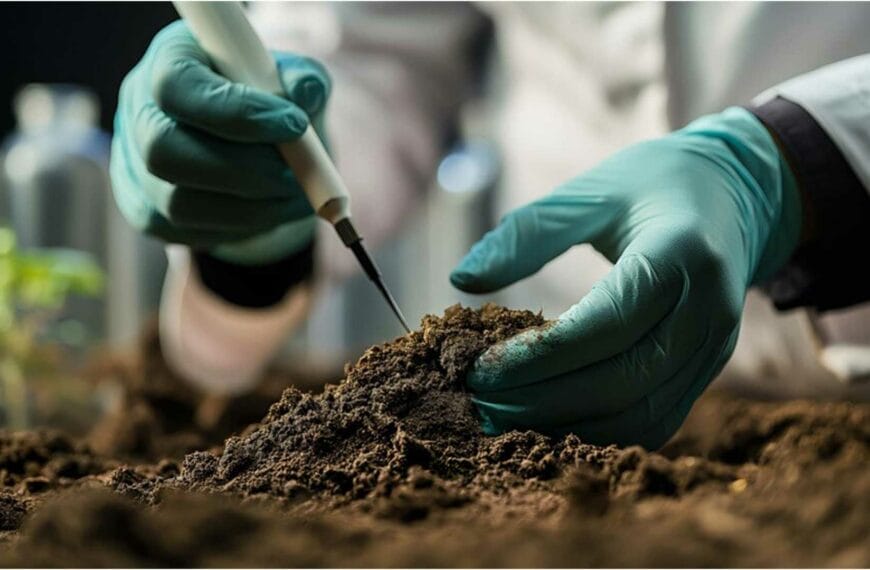
Advanced soil moisture monitoring systems can be handheld or consist of sensors installed at various depths within the soil profile that transmit data to a central hub or a cloud-based platform. This data is then analysed using sophisticated algorithms to provide detailed insights into soil moisture levels, helping farmers to pinpoint areas where water is being wasted or underutilised.
Soil moisture monitoring systems can improve water efficiency and contribute to more sustainable practices. In the following sections, we will delve deeper into the science behind these systems, exploring the importance of soil moisture optimisation, traditional measurement methods, and the key factors influencing soil moisture levels.
II. Understanding the Importance of Soil Moisture
Soil moisture plays a vital role as it directly affects seed growth, development, and overall efficiency. Water is essential to transport nutrients and regulate their internal environment. When soil moisture levels are optimal, grass can absorb the necessary water and nutrients, leading to healthy growth.
The relationship between soil moisture and growth is complex, influenced by various factors such as climate, soil type, and type of grass. However, research has consistently shown that adequate soil moisture is crucial for optimal crop growth. For example, studies have demonstrated that grass health increases by up to 20% when soil moisture levels are maintained between 60-80% of capacity.
Inadequate soil moisture can lead to decreased quality, and increased susceptibility to pests and diseases. Drought, in particular, can cause significant damage, resulting in reduced growth. Conversely, excessive soil moisture can lead to waterlogged soils, root rot, and other problems that compromise health.
Consider the different stages of grass growth and how soil moisture impacts each stage. For instance:
1. Germination: Adequate soil moisture is critical during germination, as seeds require consistent moisture to break dormancy and initiate growth.
2. Seedling establishment: Soil moisture helps seedlings develop strong roots and establish themselves in the soil.
3. Vegetative growth: During this stage, grass requires sufficient soil moisture to support growth, elongation, and root development.
III. Traditional Methods of Soil Moisture Measurement and Their Limitations
Traditional methods of soil moisture measurement have been employed for decades, but they often come with limitations that hinder accurate and timely decision-making. One common approach is manual soil sampling, collecting soil samples from various depths and even send them to laboratories for analysis. While this method provides valuable information, it is labor-intensive, time-consuming, and may not accurately represent the entire court.
Another traditional method is the use of tensiometers, which measure soil tension or suction. Tensiometers are inserted into the soil to determine the water potential, providing an indication of soil moisture levels. However, this method requires frequent calibration and maintenance, and it may not account for spatial variability within the field.
Visual observations, such as checking soil color or texture, to estimate soil moisture levels are practised While this method is inexpensive and straightforward, it is subjective and may not accurately reflect actual soil moisture conditions.
These traditional methods also face challenges such as:
* Temporal limitations: Manual sampling and tensiometer readings may not be taken frequently enough to respond to changing weather patterns or irrigation needs.
* High costs: Laboratory analysis and equipment maintenance can be expensive, making these methods inaccessible to many small-scale farmers.
* Inaccuracy: Visual observations and manual sampling may not accurately represent the entire field, leading to suboptimal irrigation management.
IV. How Advanced Sensors and Technologies Enhance Soil Moisture Monitoring
Advanced sensors and technologies have revolutionized the field of soil moisture monitoring by providing more accurate, efficient, and cost-effective solutions. These innovative tools enable managers to make informed decisions about irrigation management, ultimately optimizing growth and reducing water waste.
One key technology is the use of capacitance sensors, which measure changes in soil dielectric properties to determine moisture levels. These sensors are non-invasive, easy to install or even used as handheld devices, and can be used in a variety of soil types. Another type of sensor is the frequency domain sensor, which uses electromagnetic waves to detect soil moisture levels. This technology offers high accuracy and can be used in conjunction with other sensors to create a comprehensive soil moisture monitoring system.
Furthermore, machine learning algorithms and artificial intelligence are being integrated into soil moisture monitoring systems to analyze large datasets and provide predictive insights. These advanced analytics help anticipate changes in soil moisture levels and make proactive decisions about irrigation management.
The integration of IoT (Internet of Things) devices and wireless communication networks has also enhanced soil moisture monitoring capabilities. These systems enable real-time data transmission and remote monitoring, allowing managers to access critical information from anywhere. This connectivity also facilitates data sharing between managers and researchers, promoting collaboration and knowledge exchange.

V. Key Factors Influencing Soil Moisture Levels and Growth
Key factors influencing soil moisture levels and growth are complex and multifaceted, involving interactions between various environmental, biological, and physical components. One primary factor is precipitation patterns, which directly impact soil moisture levels. Climate change and weather variability can lead to unpredictable rainfall events, making it essential for farmers to adopt adaptive strategies for managing soil moisture.
Soil texture and structure also significantly affect soil moisture retention and availability. Sandy soils tend to drain quickly, while clay soils retain more water but may become waterlogged if excessive. Organic matter content plays a vital role in improving soil’s water-holding capacity and overall fertility. Additionally, topography and elevation can influence local microclimates, leading to variations in temperature, humidity, and wind patterns that impact soil moisture levels.
Crop selection and planting density are also crucial factors affecting soil moisture requirements. Different crops have varying water needs, and over- or under-watering can result in reduced yields or plant stress. Planting density affects evapotranspiration rates, with higher densities often requiring more frequent watering. Root depth and distribution also influence soil moisture uptake, with deeper roots accessing water stored at greater depths.
Temperature fluctuations throughout the growing season can impact soil moisture levels, with warmer temperatures increasing evaporation rates and cooler temperatures slowing down microbial activity. Soil biota, including microorganisms and insects, contribute to nutrient cycling and decomposition, which affect soil moisture dynamics. Furthermore, tillage practices and soil compaction can alter soil structure and porosity, impacting its ability to store and release water.
Understanding these interrelated factors is essential for developing effective soil moisture management strategies that promote optimal crop growth and minimise water waste. By recognising the intricate relationships between soil moisture, climate, and crop requirements, farmers can implement targeted interventions to improve soil health, increase yields, and enhance long-term sustainability.
VI. Future Developments and Trends in Soil Moisture Monitoring Technology
The field of soil moisture monitoring technology continues to evolve rapidly, driven by advances in sensor design, data analytics, and IoT connectivity. Several emerging trends and developments hold significant promise for further enhancing the capabilities and accessibility of advanced soil moisture monitoring systems.
One notable trend is the increasing adoption of wireless sensor networks (WSNs) and Internet of Things (IoT) technologies. WSNs enable real-time data transmission from remote locations, allowing for more frequent and accurate soil moisture measurements. IoT platforms facilitate seamless data exchange between sensors, cloud-based services, and mobile devices, streamlining decision-making processes and improving operational efficiency.
Artificial intelligence (AI) and machine learning (ML) algorithms are also being integrated into soil moisture monitoring systems to improve predictive modelling and anomaly detection. By analysing historical data patterns and real-time sensor readings, AI-powered systems can forecast soil moisture levels, anticipate water stress events, and recommend optimised irrigation schedules.
Another area of focus is the development of low-cost, low-power sensors that can operate for extended periods without battery replacement. These sensors utilise energy-harvesting technologies, such as solar panels or piezoelectric materials, to minimise maintenance costs and reduce environmental impact.
In addition, there is growing interest in developing soil moisture monitoring systems that integrate multiple sensing modalities, such as temperature, electrical conductivity, and spectral reflectance. These multisensor approaches can provide a more comprehensive understanding of soil properties and dynamics, leading to more effective water management strategies.
As these emerging trends and developments continue to shape the landscape of soil moisture monitoring technology, they hold great promise for revolutionising practices and promoting sustainable grass courts worldwide.
VII. Conclusion: Unlocking Optimal Yields through Advanced Soil Moisture Monitoring
In conclusion, unlocking optimal growth is a multifaceted challenge that requires a deep understanding of soil moisture dynamics and its impact on growth. By leveraging advanced soil moisture monitoring systems, managers can optimise irrigation strategies, reduce water waste, and increase productivity. These cutting-edge technologies have revolutionised grass court management, enabling data-driven decision-making and real-time monitoring of soil conditions.